
Planning a BBQ Event and Not Sure How Much Food to Order?
Have you ever worried about running out of food at a BBQ event or ordering far more than your guests can eat?
It’s one of the most common questions event organisers ask is how much BBQ per person they should serve, when planning a corporate function, wedding, birthday celebration, family gathering, or community event. Whether you’re hosting 20 guests or 200, getting the food quantities right can help you stay on budget, reduce waste, and keep everyone satisfied.
If you’re planning an event in Sydney, this guide will show you how much BBQ meat, side dishes, and bread you should allow per person and how professional caterers calculate portions for events of different sizes.
Quick Answer
For most BBQ catering events, allow approximately 225–340 grams of cooked meat per adult guest, along with 2–3 side dishes, bread rolls, and drinks.
If you’re serving multiple proteins such as smoked brisket, pulled pork, smoked chicken, and BBQ sausages, you can reduce the amount of each individual meat while still providing a generous meal.
The exact quantity depends on:
- The type of event
- The number of guests
- The menu selection
- The service style
- The age of attendees
- Whether alcohol is being served
BBQ Quantity Cheat Sheet (Quick Reference)
Before getting into the details, here’s a simple guide many professional BBQ caterers use when planning events.
Recommended BBQ Portions Per Person
| Food Item | Recommended Amount Per Guest |
| Beef Brisket | 115–170g cooked |
| Pulled Pork | 115–170g cooked |
| Smoked Chicken | 1–2 pieces |
| BBQ Sausages | 1–2 sausages |
| Side Dishes | 150–250g total |
| Bread Rolls | 1–2 rolls |
| Dessert | 1 serving |
BBQ Quantity Calculator by Guest Count
Number of Guests | Estimated Cooked Meat Required |
20 Guests | 4.5–6.8 kg |
25 Guests | 5.6–8.5 kg |
50 Guests | 11.3–17 kg |
100 Guests | 22.7–34 kg |
150 Guests | 34–51 kg |
200 Guests | 45–68 kg |
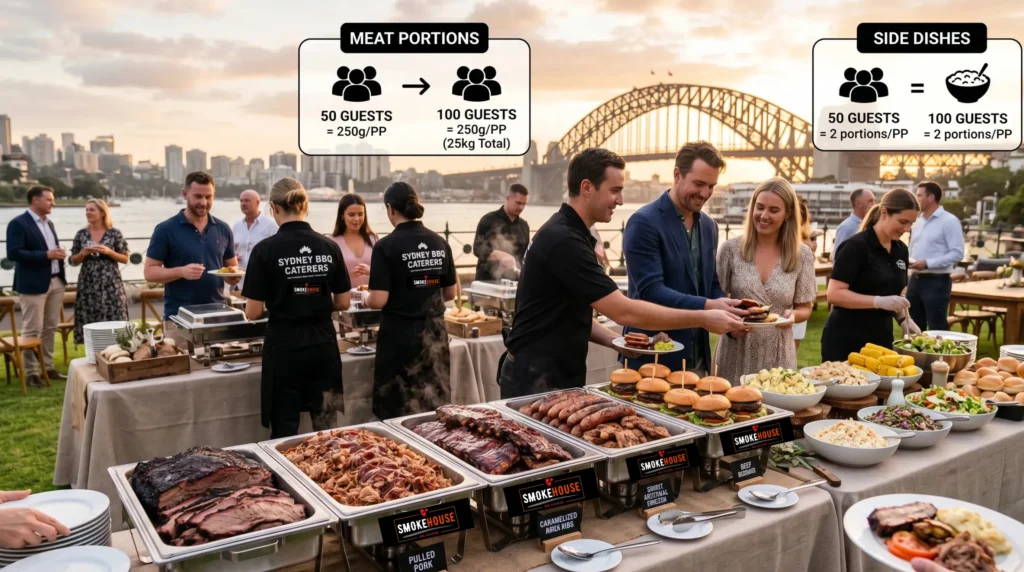
If you’re wondering how much BBQ per person to serve, most professional caterers recommend approximately 225–340 grams of cooked meat per adult guest, plus side dishes and bread. For larger events, offering multiple proteins such as brisket, pulled pork, smoked chicken, and sausages can help create a balanced menu while keeping portions manageable.
How Much BBQ Portion Per Person Sydney – Quick Planning Guide
When planning a BBQ event in Sydney, there isn’t a single serving size that works for every occasion.
A wedding reception in Parramatta may require different food quantities than a corporate lunch in Sydney CBD or a birthday celebration in Penrith.
Professional caterers typically adjust portions based on guest expectations and event style.
Standard BBQ Portions for Sydney Events
For most events, guests expect:
- One main serving of meat
- A choice of side dishes
- Bread or rolls
- Sauces and condiments
- Drinks
- Optional dessert
A buffet-style event often requires slightly more food than a plated service because guests usually serve themselves.
BBQ Food Portions Per Guest
A practical guideline is:
- 225–340g cooked meat per adult
- 75–125g side dish per serving
- 1–2 bread rolls
- Dessert if included
These amounts generally provide enough food without creating excessive leftovers.
Portion Planning for Corporate Events
Corporate functions often occur during lunch hours.
Guests usually prefer:
- Smaller portions
- Multiple protein choices
- Light side dishes
This can help reduce overall meat requirements compared with evening events.
Portion Planning for Weddings
Wedding guests often spend several hours at the venue and expect a more substantial meal.
Wedding BBQ catering menus commonly include:
- Smoked brisket
- Pulled pork
- Smoked chicken
- Premium side dishes
This usually increases overall food requirements.
Portion Planning for Birthday Parties
Birthday celebrations often attract families with children.
Because children eat smaller portions, the average food requirement per guest may be slightly lower than for an adults-only event.
Portion Planning for Community Events
Community gatherings, sporting clubs, and local festivals often have a wide range of ages and appetites.
Offering a mix of proteins and side dishes helps accommodate different preferences.
How Much BBQ Do You Need Per Person?
The amount of BBQ needed per person depends on more than guest numbers.
Professional caterers consider several factors before finalising quantities.
Standard Adult Serving Sizes
For adult guests, a practical serving generally includes:
- 225–340g cooked meat
- 2–3 side dishes
- Bread or rolls
- Sauces
Guests attending evening functions or events lasting several hours may consume more food than guests attending a short lunch event.
Children’s Portion Recommendations
Children typically require:
- Half the adult meat portion
- Smaller side dish servings
- One bread roll
If many children are attending, your overall food requirements may decrease.
Lunch vs Dinner Catering Portions
Lunch functions often require smaller portions because guests typically eat lighter meals during the day.
Dinner events usually require:
- Larger meat portions
- More side dishes
- Dessert options
This can increase overall catering quantities.
Buffet Service vs Plated Service
Buffet-style catering generally requires more food because guests have greater flexibility when serving themselves.
Plated meals allow caterers to control portions more accurately.
Single-Protein vs Multi-Protein Menus
Offering one protein often requires larger individual servings.
Offering multiple proteins such as:
- Smoked brisket
- Pulled pork
- BBQ chicken
- Smoked sausages
allows guests to enjoy variety while reducing the quantity of each meat required.
Quick Answer for Featured Snippets
The average BBQ serving per adult guest typically includes 225–340 grams of cooked meat, side dishes, and bread. Events featuring multiple protein options often require smaller portions of each meat while still providing a satisfying meal.
What Affects BBQ Portion Sizes?
Several factors influence how much food you’ll need.
Understanding these factors helps prevent both shortages and unnecessary overspending.
Event Type
Corporate Catering Events
Corporate functions often prioritise convenience and efficiency.
Guests usually prefer moderate portion sizes and a balanced menu.
Wedding Receptions
Wedding guests often stay for several hours and expect a full meal.
Food quantities may need to be increased accordingly.
Birthday Celebrations
Guest age groups can significantly affect portion planning.
Events with children generally require less food than adult-only gatherings.
Backyard Gatherings
Informal BBQ events often encourage repeat servings.
Hosts should allow slightly more food than standard calculations suggest.
Sporting and Community Events
These events often involve active attendees who may consume larger portions.
Event Duration
Longer events generally require more food.
Guests attending a six-hour event may eat more than guests attending a two-hour lunch.
Guest Demographics
Consider:
- Adults
- Teenagers
- Children
- Athletes
- Seniors
Different groups consume different quantities.
Side Dish Variety
The more side dishes available, the less meat is typically required.
Popular options include:
- Coleslaw
- Mac and cheese
- Potato salad
- Cornbread
- Baked beans
Alcohol Service
When alcohol is served, guests often spend more time socialising and may consume additional food.
Seasonal Considerations in Sydney
Sydney’s warmer months often encourage outdoor events.
Summer gatherings may require:
- More drinks
- Fresh salads
- Lighter side dishes
while cooler months may favour larger portions of smoked meats and hot sides.
How Much Meat Per Person for BBQ Catering?
One of the most searched questions is:
“How much meat per person for BBQ catering?”
The answer depends on your menu mix and event style.
Beef Brisket Portions
Smoked brisket is rich and filling.
Most caterers recommend:
- 115–170g cooked brisket per guest when served alongside other meats
- Higher portions when brisket is the primary protein
Pulled Pork Portions
Pulled pork is versatile and works well for sandwiches, sliders, and buffet-style service.
Recommended serving:
115–170g cooked pulled pork per guest
Smoked Chicken Portions
Smoked chicken is often used as a secondary protein.
A typical serving includes:
One to two pieces per guest
BBQ Sausage Portions
Sausages are commonly served alongside brisket or pulled pork.
Most events allow:
- One to two sausages per guest
Mixed BBQ Menu Recommendations
For many Sydney events, a balanced menu might include:
- Smoked brisket
- Pulled pork
- Smoked chicken
- BBQ sausages
- Multiple side dishes
This approach provides variety and helps manage food costs.
Raw Meat vs Cooked Meat Calculations
This is where many hosts make mistakes.
Professional caterers calculate quantities based on cooked yield rather than raw meat weight.
Cooking Shrinkage Explained
Meat loses moisture and fat during cooking.
Smoked brisket can lose a significant percentage of its raw weight during trimming and smoking.
Pulled pork also loses weight during cooking.
Meat Yield Calculations Used by Caterers
Professional BBQ caterers account for:
- Trimming loss
- Moisture loss
- Cooking shrinkage
- Service style
This helps produce accurate food quantities and reduces the risk of running out of food.
Professional BBQ caterers calculate food quantities using cooked yield rather than raw meat weight. This accounts for trimming and moisture loss during cooking and provides a more accurate estimate of how much meat is required per guest.
How Much Brisket Per Person?
Brisket is one of the most popular meats served at American-style BBQ events.
Because it requires long smoking times and experiences cooking shrinkage, accurate planning is important.
Recommended Brisket Serving Size
For most catering events:
- 115–170g cooked brisket per guest is usually sufficient when other meats are available.
- Larger portions may be appropriate when brisket is the primary protein.
Understanding Brisket Yield After Smoking
Brisket undergoes:
- Trimming
- Fat rendering
- Moisture loss
during the smoking process.
This means the final cooked weight will be lower than the starting raw weight.
Common Brisket Planning Mistakes
Common mistakes include:
- Calculating using raw weight
- Ignoring trimming loss
- Underestimating guest appetite
- Offering too few side dishes
How Much Brisket for 20 People?
A small event with brisket as one of several proteins may require approximately 2.5–3.5kg of finished brisket.
How Much Brisket for 50 People?
For 50 guests, many caterers would allow approximately 6–8.5kg of cooked brisket depending on menu variety.
How Much Brisket for 100 People?
For 100 guests, brisket requirements often fall between 11.5–17kg of finished product when brisket is a major menu item.
BBQ Catering Calculator
Knowing how much food to order doesn’t have to be difficult.
Professional caterers use a simple process to estimate food requirements based on guest numbers, menu selection, event duration, and service style.
Use the following steps to create a practical estimate for your event.
Step 1 – Determine Your Guest Count
Start with your confirmed attendee numbers.
Divide guests into categories where possible:
- Adults
- Teenagers
- Children
This helps create a more accurate food estimate.
For example:
- 40 adults
- 10 children
will require less food than:
- 50 adults
even though the total guest count is the same.
Step 2 – Select Your Menu
The number of proteins offered affects portion planning.
Single Protein Menu
Examples:
- Brisket only
- Pulled pork only
Guests generally consume larger portions.
Multiple Protein Menu
Examples:
- Brisket
- Pulled pork
- Smoked chicken
- BBQ sausages
Guests enjoy variety, which often reduces the amount required for each individual meat.
Step 3 – Calculate Meat Quantities
For most Sydney BBQ events:
- Allow 225–340g cooked meat per adult
- Adjust based on menu variety
Lighter lunch events generally fall at the lower end.
Wedding receptions and evening functions often sit at the higher end.
Step 4 – Add Side Dishes and Bread
Most guests expect:
- 2–3 side dishes
- Bread rolls
- Sauces and condiments
Popular side dishes include:
- Mac and cheese
- Potato salad
- Coleslaw
- Cornbread
- Baked beans
Well-balanced side dishes help control overall meat consumption.
Step 5 – Account for Event Duration
A two-hour corporate lunch requires less food than a six-hour wedding celebration.
Longer events often require:
- Additional side dishes
- Larger meat quantities
- Extra desserts
Example BBQ Catering Calculation
Example for 20 Guests
Menu:
- Brisket
- Pulled pork
- Two side dishes
Estimated requirements:
- 4.5–6.8kg cooked meat
- 3–5kg side dishes
- 20–40 bread rolls
Example for 50 Guests
Menu:
- Brisket
- Pulled pork
- Smoked chicken
- Three side dishes
Estimated requirements:
- 11–17kg cooked meat
- 7–12kg side dishes
- 50–100 bread rolls
Example for 100 Guests
Menu:
- Brisket
- Pulled pork
- Chicken
- Sausages
- Four side dishes
Estimated requirements:
- 23–34kg cooked meat
- 15–25kg side dishes
- 100–200 bread rolls
BBQ Calculator Summary Table
| Guest Count | Cooked Meat | Side Dishes | Bread Rolls | Desserts |
| 20 Guests | 4.5–6.8kg | 3–5kg | 20–40 | 20 |
50 Guests | 11–17kg | 7–12kg | 50–100 | 50 |
100 Guests | 23–34kg | 15–25kg | 100–200 | 100 |
BBQ Portions for 20 People
A gathering of 20 guests is common for:
- Backyard parties
- Family celebrations
- Small corporate lunches
Suggested Meat Quantities
A balanced menu may include:
- Smoked brisket
- Pulled pork
Total cooked meat:
- Approximately 4.5–6.8kg
Side Dish Recommendations
Choose two or three options:
- Coleslaw
- Potato salad
- Mac and cheese
Sample BBQ Menu for 20 Guests
Smoked Meats
- Texas-style brisket
- Pulled pork
Sides
- Creamy coleslaw
- Mac and cheese
- Fresh rolls
Dessert
- Brownies
- Cookies
Estimated Catering Requirements
This size event can usually be managed efficiently with a buffet setup and a focused menu.
BBQ Portions for 25 People
Twenty-five guests is a common size for birthday parties and private celebrations.
Suggested Meat Quantities
Recommended cooked meat:
- 5.6–8.5kg
Menu options:
- Brisket
- Pulled pork
- BBQ sausages
Side Dish Recommendations
Three sides generally provide enough variety:
- Potato salad
- Coleslaw
- Baked beans
Sample BBQ Menu for 25 Guests
Smoked Meats
- Brisket
- Pulled pork
- Sausages
Sides
- Potato salad
- Coleslaw
- Baked beans
Dessert
- Cookies
- Slices
Estimated Catering Requirements
A menu with multiple proteins often delivers a better guest experience without significantly increasing food costs.
BBQ Portions for 50 People
Fifty guests is one of the most common catering sizes for Sydney events.
Suggested Meat Quantities
Recommended cooked meat:
- 11–17kg
Typical menu:
- Brisket
- Pulled pork
- Smoked chicken
Side Dish Recommendations
Offer at least three side dishes.
Popular options:
- Mac and cheese
- Coleslaw
- Potato salad
Sample BBQ Menu for 50 Guests
Smoked Meats
- Slow-smoked brisket
- Pulled pork
- Smoked chicken
Sides
- Mac and cheese
- Coleslaw
- Potato salad
Extras
- Bread rolls
- Pickles
- House-made sauces
Estimated Catering Requirements
Many corporate events, engagement parties, and milestone birthdays fall within this guest range.
BBQ Portions for 100 People
Large events require careful planning.
Food shortages become much more noticeable when guest numbers increase.
Suggested Meat Quantities
Recommended cooked meat:
- 23–34kg
Typical menu:
- Brisket
- Pulled pork
- Chicken
- Sausages
Side Dish Recommendations
Offer a wider range of choices.
Examples:
- Mac and cheese
- Coleslaw
- Potato salad
- Baked beans
Sample BBQ Menu for 100 Guests
Smoked Meats
- Texas brisket
- Pulled pork
- BBQ chicken
- Smoked sausages
Sides
- Mac and cheese
- Potato salad
- Coleslaw
- Baked beans
Extras
- Bread rolls
- Sauces
- Pickles
Large Event Catering Considerations
For larger events:
- Allow extra food as a safety margin
- Consider multiple serving stations
- Plan for dietary requirements
- Coordinate food service timing carefully
Professional catering support becomes increasingly valuable as guest numbers grow.
BBQ Portions for 150–200 People
Large weddings, corporate functions, and community events often fall into this category.
Catering Logistics for Large Events
Large guest counts require:
- Accurate food forecasting
- Professional service planning
- Efficient buffet management
Food Quantity Planning
For 150–200 guests, many events require:
- 34–68kg of cooked meat
- Significant side dish preparation
- Additional service staff
Staffing Requirements
Professional catering teams often assist with:
- Food preparation
- Buffet management
- Guest service
- Clean-up
Service Setup Considerations
Large events may benefit from:
- Multiple buffet stations
- Separate beverage areas
- Dedicated service staff
This helps reduce queues and improve guest flow.
BBQ Side Dish Portion Guide
Side dishes play an important role in any BBQ menu.
They add variety, balance flavours, and help manage meat quantities.
Coleslaw Portions
Allow:
- 75–100g per guest
Coleslaw provides freshness and pairs well with brisket and pulled pork.
Potato Salad Portions
Allow:
- 75–100g per guest
Potato salad is one of the most popular BBQ sides at Sydney events.
Mac and Cheese Portions
Allow:
- 75–120g per guest
Mac and cheese is particularly popular at American-style BBQ events.
Baked Beans Portions
Allow:
- 75–100g per guest
Baked beans work well with smoked meats and sausages.
Cornbread Portions
Allow:
- One serving per guest
Cornbread adds variety and complements traditional American BBQ menus.
Fresh Salad Portions
Fresh salads are especially popular during Sydney’s warmer months.
Popular options include:
- Garden salad
- Pasta salad
- Mediterranean salad
Dessert Planning
For most events:
- One dessert per guest is sufficient
Popular choices include:
- Brownies
- Cookies
- Dessert slices
Sample BBQ Menus by Guest Count
The following examples demonstrate how professional caterers build balanced menus.
BBQ Menu for 20 Guests
Smoked Meats
- Brisket
- Pulled pork
Sides
- Coleslaw
- Mac and cheese
Extras
- Bread rolls
- Pickles
- BBQ sauces
BBQ Menu for 50 Guests
Smoked Meats
- Brisket
- Pulled pork
- Smoked chicken
Sides
- Potato salad
- Coleslaw
- Mac and cheese
Extras
- Bread rolls
- Pickles
- Sauces
BBQ Menu for 100 Guests
Smoked Meats
- Brisket
- Pulled pork
- Chicken
- Sausages
Sides
- Mac and cheese
- Coleslaw
- Potato salad
- Baked beans
Extras
- Rolls
- Pickles
- Sauces
Corporate BBQ Menu Example
A corporate event menu often includes:
Smoked Meats
- Brisket
- Pulled pork
Sides
- Coleslaw
- Fresh salad
Extras
- Bread rolls
- Soft drinks
This format works well for lunch functions and networking events.
Wedding BBQ Catering Menu Example
Wedding guests generally expect a wider selection.
Smoked Meats
- Premium brisket
- Pulled pork
- Smoked chicken
Sides
- Mac and cheese
- Potato salad
- Coleslaw
- Seasonal salad
Extras
- Bread rolls
- Desserts
- Sauces
BBQ Catering Cost Per Person in Sydney
One of the most common questions event organisers ask is:
“What is the average cost per person for BBQ catering?”
The answer depends on several factors, including menu selection, guest numbers, service requirements, and venue logistics.
While every event is different, understanding what affects catering costs can help you plan a realistic budget.
What Influences BBQ Catering Costs?
Guest Numbers
Larger events often benefit from economies of scale.
A catering package for 100 guests may have a lower cost per person than a package for 20 guests because equipment, staffing, and transport costs are spread across more attendees.
Menu Selection
Premium menu items can increase catering costs.
Examples include:
- Slow-smoked beef brisket
- Specialty smoked meats
- Premium desserts
- Additional side dishes
A simple menu with two proteins may cost less than a menu featuring four or five options.
Service Style
The level of service can affect pricing.
Examples include:
- Drop-off catering
- Buffet service
- Fully staffed catering
Events requiring serving staff, equipment setup, and onsite cooking generally involve additional costs.
Venue Requirements
Venue accessibility can impact logistics.
Factors may include:
- Distance from Sydney CBD
- Access restrictions
- Setup requirements
- Event duration
Staffing Requirements
Larger events often require:
- Additional chefs
- Service staff
- Setup crew
- Clean-up support
These factors influence overall catering costs.
Why Portion Planning Impacts Budget
Ordering too much food can increase costs unnecessarily.
Ordering too little can lead to guest dissatisfaction and last-minute expenses.
Accurate portion planning helps balance:
- Food quality
- Guest satisfaction
- Budget management
This is one reason many event organisers work with experienced caterers.
Common Catering Budget Mistakes
Avoid these common issues:
- Estimating food quantities without professional guidance
- Ignoring cooking shrinkage
- Underestimating side dishes
- Choosing too many menu items
- Forgetting dietary requirements
Comparing DIY BBQ vs Professional Catering
While self-catering may appear less expensive at first, many hosts overlook:
- Equipment hire
- Food preparation time
- Cooking responsibilities
- Food safety considerations
- Cleanup requirements
Professional catering allows hosts to focus on guests rather than managing food preparation throughout the event.
BBQ Catering Trends and Event Planning Insights in Australia
The Australian catering industry continues to grow as more businesses, families, and organisations choose professionally prepared food for events.
Growing Demand for Event Catering
Events have become increasingly experience-focused.
Guests now expect:
- High-quality food
- Flexible menu options
- Professional presentation
- Reliable service
This trend has increased demand for specialised catering services, including American-style BBQ catering.
Why BBQ Catering Remains Popular for Australian Events
BBQ catering offers:
- Flexible menus
- Casual dining atmosphere
- Suitable options for large groups
- Indoor and outdoor event suitability
These advantages make BBQ catering popular for:
- Corporate functions
- Weddings
- Birthday celebrations
- Community events
Trends in Corporate Catering
Corporate event organisers increasingly seek:
- Shared dining experiences
- Fresh ingredients
- Menu variety
- Easy service formats
Buffet-style BBQ catering aligns well with these preferences.
Trends in Wedding Catering
Many couples are moving away from traditional plated meals and choosing relaxed dining experiences.
BBQ catering offers:
- Variety
- Flexibility
- Guest interaction
- Memorable dining experiences
Industry Statistics and Research
According to the Australian Bureau of Statistics (ABS), spending on food services and hospitality continues to play a significant role in Australia’s service economy.
Industry reports from Restaurant & Catering Australia and IBISWorld also indicate ongoing demand for catering services driven by business events, private celebrations, and hospitality growth.
When writing the final published version, include current statistics sourced directly from:
- Australian Bureau of Statistics (ABS)
- Restaurant & Catering Australia
- Tourism Research Australia
- IBISWorld Australia
What These Trends Mean for Event Organisers
Professional catering is increasingly viewed as an investment in guest experience rather than simply a food service.
Good food often becomes one of the most memorable parts of any event.
How Professional BBQ Caterers Calculate Food Quantities
Professional caterers rarely rely on simple guest-count estimates alone.
They use a structured approach to determine food quantities accurately.
Portion Planning Methodology
Experienced caterers assess:
- Guest numbers
- Event type
- Menu selection
- Service style
- Event duration
before calculating food requirements.
Yield Calculations
Meat loses weight during:
- Trimming
- Smoking
- Cooking
Professional caterers calculate finished yield rather than raw weight to improve accuracy.
Waste Reduction Techniques
Food waste can increase costs.
Professional planning helps reduce waste by:
- Matching portions to guest profiles
- Choosing appropriate menu sizes
- Managing buffet replenishment carefully
Event-Specific Menu Planning
A corporate lunch and wedding reception may have identical guest numbers but very different food requirements.
Professional caterers adjust portions accordingly.
Guest Experience Considerations
Successful events balance:
- Food quantity
- Menu variety
- Service quality
- Guest expectations
The goal is not simply to provide more food, but to provide the right amount.
Why Accurate Planning Improves Event Outcomes
Proper planning helps:
- Prevent food shortages
- Reduce unnecessary waste
- Improve budget control
- Create a better guest experience
Common BBQ Catering Mistakes to Avoid
Even well-planned events can encounter issues if food quantities are not calculated correctly.
Ordering Too Little Food
Running out of food can negatively affect guest experience.
It is often better to allow a small safety margin than risk shortages.
Ordering Too Much Food
Excessive food orders increase costs and waste.
Balanced planning helps avoid unnecessary spending.
Ignoring Cooking Shrinkage
Many hosts calculate quantities using raw meat weight.
Smoked brisket and pulled pork lose weight during cooking, which affects final serving quantities.
Underestimating Side Dishes
Side dishes contribute significantly to guest satisfaction.
A menu with strong side dish options may reduce overall meat consumption.
Forgetting Dietary Preferences
Modern events often include guests who require:
- Vegetarian options
- Gluten-free choices
- Dairy-free selections
Planning for these needs improves inclusivity.
Not Matching Portions to Event Type
Food requirements vary between:
- Weddings
- Corporate events
- Birthday parties
- Community gatherings
Using the same calculation for every event may create inaccurate estimates.
Common Mistake
Many event organisers focus only on meat quantities and overlook side dishes, bread, desserts, and dietary preferences. A balanced menu often delivers a better guest experience than simply increasing meat portions.
BBQ Catering Quantities for Sydney Events
Sydney events often vary significantly in size and style.
Understanding local event requirements helps improve planning accuracy.
Corporate Events in Sydney CBD
Corporate functions often require:
- Efficient service
- Balanced portions
- Flexible menus
Buffet-style BBQ catering is a popular choice for networking events and team gatherings.
Wedding Catering in Parramatta
Wedding receptions often involve:
- Extended event durations
- Multiple courses
- Larger food requirements
Portion planning should account for these factors.
Private Parties in Penrith
Birthday parties and family celebrations often benefit from:
- Mixed BBQ menus
- Flexible serving styles
- Family-friendly side dishes
Community Events in Liverpool
Community gatherings may require:
- Larger catering volumes
- Fast service
- Menu variety
Professional planning becomes particularly important at this scale.
Catering for Western Sydney Gatherings
Western Sydney hosts a wide range of:
- Sporting events
- School functions
- Business events
- Family celebrations
Each event type requires different food planning strategies.
Large Events Across Greater Sydney
For events exceeding 100 guests, professional catering support can help manage:
- Food quantities
- Staffing
- Service flow
- Guest satisfaction
Why Local Catering Experience Matters
Local experience helps caterers understand:
- Venue requirements
- Travel logistics
- Seasonal considerations
- Guest expectations
Why Sydney Event Organisers Choose Smokehouse BBQ Catering
Planning food quantities is only one part of a successful event.
The quality of the food and service also matter.
Authentic American BBQ
Smokehouse BBQ Catering specialises in authentic American-style BBQ prepared using traditional low-and-slow smoking methods.
Slow-Smoked Brisket and Pulled Pork
Popular menu items include:
- Beef brisket
- Pulled pork
- Smoked chicken
- BBQ sausages
These options work well for events of all sizes.
Flexible Catering Packages
Events vary in size and budget.
Flexible catering options help organisers choose a menu that suits their requirements.
Catering for Events of Every Size
Whether you’re planning:
- A backyard celebration
- A corporate function
- A wedding reception
- A community event
professional planning helps improve outcomes.
Experienced Catering Team
Experienced caterers can assist with:
- Portion calculations
- Menu recommendations
- Event logistics
- Service planning
Reliable Portion Planning Support
One of the advantages of working with a professional BBQ catering team is receiving guidance on food quantities before the event begins.
Final Thoughts
Key Takeaways for BBQ Portion Planning
If you’re planning a BBQ event, remember these simple guidelines:
- Start with accurate guest numbers.
- Calculate portions using cooked yield.
- Consider event type and duration.
- Include enough side dishes and bread.
- Plan for dietary preferences.
- Seek professional advice when needed.
Getting the quantities right helps reduce waste, improve guest satisfaction, and create a smoother event experience.
Ready to Plan Your Next BBQ Event?
Whether you’re organising a corporate function in Sydney CBD, a wedding in Parramatta, a birthday party in Penrith, or a community gathering in Western Sydney, Smokehouse BBQ Catering can help you plan the right menu and food quantities for your guests. Let our team help you create a memorable BBQ catering experience with authentic American-style smoked meats and professional event support.
FAQ’s
1. How much BBQ should I serve per person?
Most events require approximately 225–340 grams of cooked meat per adult guest, plus side dishes, bread, and drinks.
2. How much brisket do I need for 50 people?
Many caterers recommend approximately 6–8.5kg of cooked brisket for 50 guests, depending on menu variety and accompanying dishes.
3. How much pulled pork should I order per guest?
A typical serving ranges from 115–170 grams of cooked pulled pork per guest.
4. How many side dishes should I serve with BBQ?
Most catering menus include two to four side dishes depending on the event style and guest expectations.
5. Is buffet-style BBQ suitable for large events?
Yes. Buffet service works well for large groups because it provides flexibility and efficient service.
6. How much BBQ do I need for 100 guests?
Most events require approximately 23–34kg of cooked meat for 100 adult guests, depending on menu structure.
7. What is the average BBQ catering cost per person in Sydney?
The average BBQ catering cost in Sydney is approximately AUD $45 per person. Most businesses and event planners use $45/person as a practical budgeting figure for quality BBQ catering.
8. Can a BBQ caterer calculate food quantities for me?
Yes. Professional caterers regularly calculate food quantities based on guest count, menu selection, and event requirements.