
Planning a wedding, birthday party or corporate event and wondering whether American BBQ or Korean BBQ would be a better choice?
Both styles are known for their grilled meats and rich flavours, but the way they prepare, cook and serve food is quite different. Understanding these differences can help you choose a catering style that suits your guests and event.
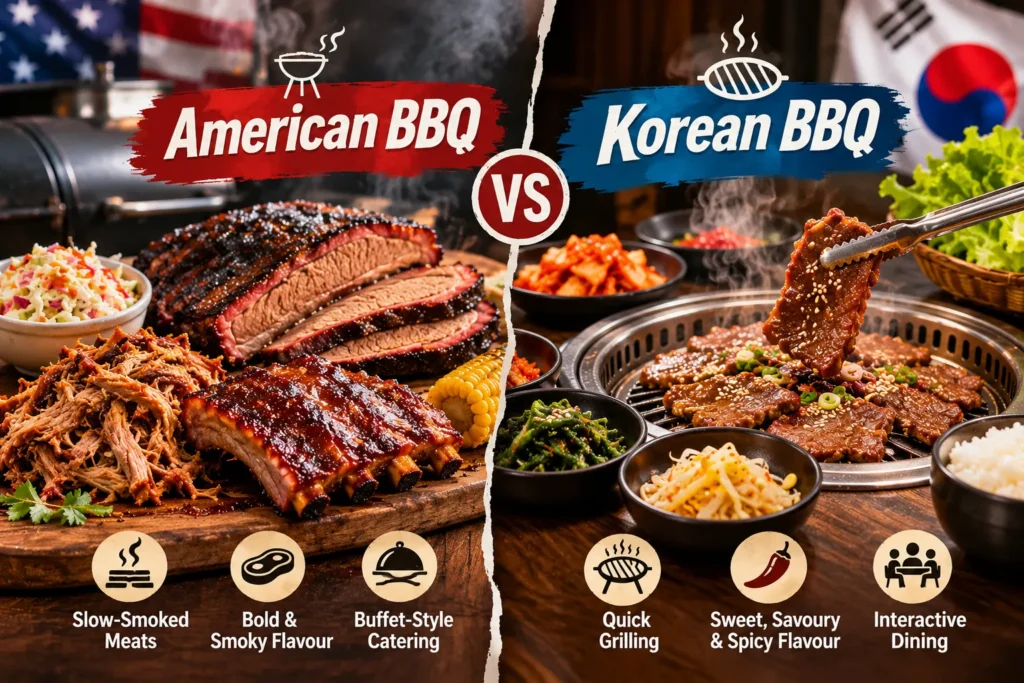
Quick answer: American BBQ is known for slow-smoked meats such as beef brisket, pork ribs and pulled pork. Korean BBQ usually features smaller cuts of meat grilled over direct heat, often served with marinades, dipping sauces, rice and traditional side dishes.
If you prefer smoky meats and buffet-style catering, American BBQ may be a good fit. If you enjoy freshly grilled meat, Korean marinades and interactive dining, Korean BBQ may suit your preferences.
What Is American BBQ?
American BBQ is a cooking style that uses controlled heat, smoke and time to prepare meat. Large cuts of beef and pork are often cooked slowly in a smoker until they become tender.
Unlike quick grilling, traditional American BBQ gives the meat time to cook at a steady temperature. Wood smoke also adds flavour during the cooking process.
Some popular American BBQ meats include:
- Beef brisket: A large cut of beef that is slowly smoked until tender.
- Pork ribs: Ribs cooked slowly and often finished with BBQ sauce.
- Pulled pork: Pork shoulder cooked until the meat can be pulled apart easily.
- Beef ribs: Large beef ribs smoked until tender.
- Smoked chicken: Chicken prepared with seasoning and wood smoke.
American BBQ also has several regional styles. Texas BBQ is well known for smoked beef brisket, while Carolina BBQ has strong traditions around pork and vinegar-based sauces. Memphis is known for its pork ribs, which may be prepared with dry seasoning or sauce.
These regional styles show that American BBQ is not limited to one recipe or flavour.
How Is American BBQ Cooked?
One of the main methods used in American BBQ is called low-and-slow cooking.
This means cooking meat at a controlled, lower temperature over a longer period. The meat is usually placed away from the main heat source, allowing it to cook gradually.
The process generally includes:
- Meat selection: Choosing suitable cuts, such as brisket, pork shoulder or ribs.
- Preparation: Trimming the meat and applying a dry rub or seasoning.
- Smoker setup: Preparing the smoker with suitable wood or charcoal.
- Slow cooking: Maintaining a steady cooking temperature while the meat cooks.
- Resting: Allowing the cooked meat to rest before slicing or serving.
Why does this method take so long?
Large cuts such as brisket contain connective tissue. During extended cooking, collagen in that tissue gradually changes into gelatin, helping the meat become tender.
According to Texas A&M Meat Science, low-temperature cooking and indirect heat are commonly used for large BBQ cuts such as brisket and pork shoulder.
Source: Texas A&M University – Cooking and Smoking Barbecue.
What Is Korean BBQ?
Korean BBQ, known as gogi-gui, is a Korean style of grilling meat. It is commonly enjoyed at restaurants where diners cook meat on a grill built into the dining table, although some restaurants have staff prepare the meat.
The meat is often cut into smaller portions so it can cook quickly over direct heat. Some cuts are marinated before cooking, while others are seasoned more simply.
Popular Korean BBQ dishes include:
- Bulgogi: Thinly sliced beef, usually marinated in a mixture that may include soy sauce, garlic, sugar and sesame oil.
- Galbi: Grilled beef or pork ribs, often prepared with a sweet and savoury marinade.
- Samgyeopsal: Pork belly grilled and commonly eaten with lettuce, dipping sauces and other sides.
- Chadolbaegi: Thinly sliced beef brisket that cooks quickly on a hot grill.
Korean BBQ is also known for the way food is shared. Grilled meat is often eaten with rice, vegetables, sauces and small side dishes called banchan.
How Is Korean BBQ Cooked?
Korean BBQ usually uses direct heat rather than the long smoking process associated with American BBQ.
The cooking setup may use charcoal, gas or another suitable heat source. The meat is grilled in smaller portions and served as it cooks.
A typical preparation process includes:
- Meat preparation: Cutting the meat into suitable portions.
- Marinating: Adding ingredients such as soy sauce, garlic, sesame oil or sugar, depending on the dish.
- Grilling: Cooking the meat directly over a hot grill.
- Serving: Pairing the meat with rice, sauces, vegetables and side dishes.
A well-known part of Korean dining is ssam. It involves wrapping grilled meat in lettuce or perilla leaves, often with garlic, rice and a sauce called ssamjang.
The Korea Tourism Organization describes Korean BBQ as a dining experience where guests grill meat at the table and enjoy it with side dishes, stews and noodles.
Source: Korea Tourism Organization – About Korean Food.
American BBQ vs Korean BBQ: Main Differences
The main difference between American BBQ and Korean BBQ is their cooking method and serving style.
American BBQ often involves smoking larger cuts of meat over several hours. Korean BBQ generally uses direct grilling, with meat served alongside sauces, rice and smaller dishes.
Here is a simple comparison:
| Feature | American BBQ | Korean BBQ |
| Main cooking method | Low-and-slow smoking and indirect heat | Direct grilling |
| Cooking time | Often several hours | Usually a few minutes per portion |
| Common meats | Brisket, pork ribs, pulled pork and chicken | Beef, pork belly, short ribs and chicken |
| Meat preparation | Dry rubs and seasoning | Marinades and seasoning |
| Main flavour | Smoky, savoury, peppery and sometimes sweet | Sweet, savoury, salty and sometimes spicy |
| Common sides | Coleslaw, potato salad, corn and bread rolls | Kimchi, rice, lettuce wraps and vegetables |
| Serving style | Platters, buffet spreads or prepared portions | Shared dishes and table grilling |
These are general differences. Both cuisines have regional variations, and individual dishes may use different cooking methods.
1. Cooking Methods: Smoking vs Grilling
The cooking method has a major effect on the final taste and texture of the meat.
American BBQ: Slow Smoking
American BBQ uses controlled heat and, in many traditional styles, wood smoke to cook meat over an extended period.
For example, a whole beef brisket can take many hours to cook. The meat needs enough time for the internal temperature to rise and the connective tissue to soften.
The result is tender meat with a smoky outer layer and a rich flavour.
At Smokehouse BBQ Catering, the cooking approach follows this low-and-slow method. The company describes using ironbark, applewood, cherry wood and charcoal in its smoking process.
Korean BBQ: Direct Grilling
Korean BBQ usually involves placing meat directly over a hot cooking surface.
Thinly sliced beef, pork belly and marinated ribs can cook quickly. Guests may grill small portions during the meal and eat them as they are ready.
This creates a more interactive dining experience, particularly in restaurants with built-in tabletop grills.
2. Meat Preparation and Seasoning
Another difference is how the meat is prepared before cooking.
American BBQ Dry Rubs
American BBQ often uses dry rubs. These are mixtures of dry seasonings applied directly to the meat.
Common ingredients include:
- Salt
- Black pepper
- Paprika
- Garlic powder
- Onion powder
- Chilli powder
The seasoning helps build flavour during cooking. Some meats are also finished with BBQ sauce, depending on the regional style and recipe.
For example, Texas-style brisket is often kept simple with salt and pepper, allowing the beef and smoke to play a major role in the final flavour.
Korean BBQ Marinades
Korean BBQ often uses marinades to add flavour before grilling.
A typical bulgogi or galbi marinade may contain:
- Soy sauce
- Garlic
- Sugar
- Sesame oil
- Onion
- Pear
The ingredients can vary between recipes. Some marinades have a sweeter taste, while others focus more on savoury or spicy flavours.
The Korea Tourism Organization’s description of marinated beef galbi includes soy sauce, sugar and garlic. The meat is grilled over charcoal or an iron plate and may be eaten with lettuce or perilla leaf wraps.
Source: Korea Tourism Organization – Marinated Grilled Beef Galbi.
3. Flavour: Smoky vs Sweet, Savoury and Spicy
Both styles offer plenty of flavour, but the ingredients and cooking process create different results.
American BBQ is often recognised by its smoky taste. The wood, dry rub and sauce all affect the final flavour.
Depending on the recipe, you may notice:
- Smoky and peppery flavours.
- Rich, savoury meat.
- Sweetness from BBQ sauce.
- Mild heat from chilli.
- Tanginess from vinegar-based sauces.
Korean BBQ often combines sweet, savoury, salty and spicy flavours.
Soy sauce, garlic, sesame oil, chilli and other ingredients are common in Korean marinades and sauces.
For example:
- Bulgogi is often sweet and savoury.
- Soy-marinated galbi has a rich, salty-sweet taste.
- Some Korean pork and chicken dishes use chilli-based sauces for extra heat.
Neither style has just one fixed flavour. The final result depends on the meat, recipe, seasoning and cooking method.
4. Side Dishes and Serving Style
Side dishes are an important part of both cuisines, but the food is usually served differently.
American BBQ Side Dishes
American BBQ meals often place the smoked meat at the centre of the plate, with sides served alongside it.
Common options include:
- Coleslaw
- Potato salad
- Corn
- Baked beans
- Macaroni and cheese
- Bread rolls
For catering events, these sides can be arranged on a buffet or served with prepared meat portions.
Korean BBQ Side Dishes
Korean BBQ often includes several smaller dishes served alongside the grilled meat.
These may include:
- Kimchi
- Seasoned vegetables
- Pickled vegetables
- Steamed rice
- Garlic
- Dipping sauces
Two Korean dining terms are worth knowing:
- Banchan: Small side dishes served with a Korean meal.
- Ssam: A wrap made by placing grilled meat and other ingredients inside lettuce or perilla leaves.
The Korea Tourism Organization explains that Korean meals often include rice, kimchi and a selection of side dishes. It also describes the use of lettuce wraps and table grills in Korean meat restaurants.
Source: Korea Tourism Organization – About Korean Food.
5. American BBQ vs Korean BBQ for Catering Events
Choosing between American BBQ and Korean BBQ is not only about flavour. You also need to think about the venue, guest numbers, serving arrangements and event schedule.
American BBQ Catering for Events
American BBQ can work well for weddings, birthdays, corporate functions and outdoor gatherings.
Slow-smoked meats can be prepared before service and portioned for guests. This makes buffet and platter-style catering a practical option for many events.
American BBQ may suit your event if you want:
- Smoked brisket, ribs and pulled pork.
- A shared buffet or platter-style meal.
- Familiar sides such as coleslaw and potato salad.
- Prepared food that guests can serve themselves or receive as portions.
- Menu options that can be planned around guest numbers.
For example, a wedding reception could include smoked brisket, pulled pork, chicken and several sides, allowing guests to choose what they would like to eat.
Korean BBQ Catering for Events
Korean BBQ may suit events where the host wants guests to take part in preparing their meal.
Depending on the catering arrangement, meat may be grilled by guests or prepared by a catering team. The meal can include marinated beef, pork belly, rice, sauces and Korean side dishes.
It may be a good choice if you want:
- A more interactive meal.
- Freshly grilled meat.
- Korean marinades and dipping sauces.
- Lettuce wraps and traditional side dishes.
- A shared dining experience.
However, tabletop grilling requires suitable equipment, ventilation and enough space. The venue must also allow this type of cooking.
What Should You Check Before Booking?
Regardless of the style you choose, ask the caterer about these details:
- Guest numbers: Can the catering team serve your expected number of guests?
- Menu choices: What meats, sides and vegetarian options are available?
- Dietary needs: Can allergies and other dietary requirements be discussed?
- Venue facilities: Does the venue allow smokers, grills or tabletop cooking?
- Service arrangements: Is the food delivered, prepared on-site or served by staff?
- Package inclusions: Are plates, cutlery, serving equipment and staff included?
- Serving time: How will the food be served so guests are not waiting too long?
Planning tip: Do not compare catering quotes based on price alone. Check the menu, portion sizes, service arrangements and package inclusions. A buffet with prepared food and a tabletop grilling experience require different equipment and planning.
Which BBQ Catering Style Is Better for Your Event?
There is no single answer. The right choice depends on the type of event, the venue and what your guests enjoy.
| Event requirement | Style to consider | Why |
| Wedding reception | American BBQ | Smoked meats and shared sides can work well for buffet service |
| Corporate lunch | American BBQ | Prepared portions can make group service easier |
| Interactive dinner | Korean BBQ | Guests can take part in grilling their food |
| Casual birthday party | Either style | Both can suit informal gatherings |
| Venue with limited cooking facilities | Prepared American BBQ catering may be easier | Food can be cooked before delivery, subject to the caterer’s arrangements |
| Guests who enjoy Korean flavours | Korean BBQ | Marinades, sauces and Korean side dishes suit this preference |
Think about the experience you want to create. If you want guests to enjoy a relaxed meal with smoked meats and familiar sides, American BBQ may be the better match. If you want the cooking process to become part of the dining experience, Korean BBQ may be worth considering.
Why Choose American BBQ Catering in Sydney?
If you enjoy slow-smoked meat, traditional BBQ seasoning and hearty sides, American BBQ could be a good choice for your next event.
Smokehouse BBQ Catering specialises in American-style BBQ catering across Sydney and Greater Sydney. Its menu includes options such as beef brisket, pulled pork, pork ribs, beef ribs, braised meats and fresh sides.
The business was launched in September 2024, building on the pitmaster’s 20 years of hands-on BBQ experience. According to the company’s About Us page, its cooking approach focuses on steady temperature control, suitable hardwood selection and proper resting time.
Smokehouse uses ironbark, applewood and cherry wood as part of its smoking approach. Its catering packages are designed for events ranging from smaller gatherings to large functions.
You can view the Smokehouse BBQ Catering menu to compare available packages and food options.
Planning a wedding? Read the Wedding BBQ Catering Sydney Guide for menu and event-planning advice.
For larger gatherings and corporate functions, the guide on how to plan a BBQ catering event in Sydney can help you prepare for the day.
You can also learn more about the team’s background and cooking approach on the About Smokehouse BBQ Catering page.
Final Thoughts
American BBQ and Korean BBQ offer two different ways to enjoy meat, seasoning and fire.
American BBQ focuses on slow cooking, wood smoke and larger cuts of meat. Korean BBQ is known for direct grilling, marinades, dipping sauces and shared side dishes.
If you are planning a wedding, birthday party or corporate event in Sydney and prefer slow-smoked brisket, ribs, pulled pork and classic BBQ sides, American BBQ catering is worth considering.
Planning an event in Sydney? Visit the Smokehouse BBQ Catering menu or contact the team to discuss your guest numbers, menu preferences and event requirements.
Frequently Asked Questions
1. What is the main difference between American BBQ and Korean BBQ?
American BBQ is commonly associated with slow-smoked meats such as brisket, ribs and pulled pork. Korean BBQ usually focuses on direct grilling, marinades and serving meat with rice, sauces and side dishes.
2. Is American BBQ smoked or grilled?
Traditional American BBQ often uses low-and-slow smoking and indirect heat. Some American BBQ dishes are grilled, but smoking is a defining feature of many well-known American BBQ traditions.
3. Is Korean BBQ always spicy?
No. Korean BBQ is not always spicy. Bulgogi and many galbi recipes have sweet and savoury flavours. Other dishes use chilli-based marinades and sauces for a stronger heat.
4. What meats are commonly used in Korean BBQ?
Beef, pork belly and short ribs are popular choices. Bulgogi uses thinly sliced beef, while samgyeopsal is a well-known grilled pork belly dish.
5. What meats are popular in American BBQ?
Popular choices include beef brisket, pork ribs, pulled pork, beef ribs and smoked chicken. The selection varies between regional BBQ traditions and catering menus.
6. Which BBQ style is better for a wedding?
Both can work for weddings. American BBQ is a good option for couples who prefer smoked meats and buffet-style service. Korean BBQ may suit couples who want an interactive dining experience. The venue, guest numbers and service arrangements should guide the choice.
7. Can American BBQ be served at a corporate event?
Yes. American BBQ can be served at corporate lunches, staff celebrations, client events and outdoor functions. A menu with different meats and sides gives guests a choice while allowing the catering team to plan the service around the event.
8. Does Smokehouse BBQ Catering offer Korean BBQ?
Smokehouse BBQ Catering specialises in American-style BBQ catering across Sydney. Its menu features slow-smoked meats, BBQ sides and catering packages. Contact the team directly to discuss your event requirements and available options.